AI service management on Halo. AI engineering beyond it. Products of our own.

Building the agent is the easy part.

Running it is the work. We run AI as a managed service inside Halo, engineer agents and integrations where Halo is not the platform, and ship our own products. Every part runs on our own service desk before it reaches yours.

The scorecard takes five minutes and needs no sign-up. The assessment is a fixed £4,950 + VAT.

AI Service RegisterIllustrative service desk
AgentOwnerAuthorityStatus
Triage assistantService Desk LeadAdvisoryLive
Knowledge answererKnowledge OwnerAdvisoryLive
Approval helperChange ManagerSupervisedLive
Asset enrichmentCMDB OwnerAutonomousUnder review
Password reset agentSecurity LeadSupervisedAwaiting introduction
AGT-005 introduced via AI Introduction Workflow. Authority: Supervised. Approved by Security Lead.
Every action an agent takes is written to the service record.

Six agents go live. Then three questions arrive.

Each agent was a good decision on its own. None of them is the problem. The portfolio is, and the questions come from people who never asked for an agent.

How the lifecycle answers them

What are these agents costing us, and what are they returning?

Today, typically

Spend is spread across platforms and projects, and nobody owns the total. Return is a feeling, not a line.

With the lifecycle

Every agent has a value measure set at Plan and a cost line reviewed at Assure. The register is the total, and it is one page.

Three parts to the work. One discipline runs through them.

We learned to govern AI by running it on our own service desk. That discipline became the lifecycle. The same team builds AI where Halo is not the platform and turns recurring problems into products.

On Halo

AI Service Lifecycle

Run AI as a service, not a pile of projects.

Plan, prepare, introduce, operate, assure and evolve AI services through working artefacts in the platform you already run.

  • AI Service Register and Catalogue
  • AI Introduction Workflow
  • Agent Change Control and AI Incident Workflow
  • Assurance Dashboard
Read the lifecycle

Any platform

AI Beyond Halo

For problems that are not Halo-shaped.

Engineering work when the answer lives across systems, an agent needs to act rather than talk, or useful data sits behind an old interface.

  • Agents and MCP tooling
  • Knowledge and retrieval
  • Workflow automation and integration
  • Bespoke applications and managed operations
See the engineering

Our own

Products and Labs

What we keep meeting becomes a product.

Recommendation Readiness measures whether AI assistants can discover you, understand you, find evidence and recommend you.

  • Explore, prototype, validate, productise
  • Product 02 is in validation
See the products

Six stages, from decision to retirement.

The lifecycle is built as working artefacts inside Halo, under the service data model you already run. Choose a stage to see what it decides and what it leaves behind.

What it decides

Which AI services are worth running. Use case, business owner, value measure and risk position are defined before anything is built.

Deliverable

Opportunity case

Halo artefact

AI Service Register

Start with a fixed-price assessment.

The AI Service Readiness and Portfolio Assessment tells you what is actually running, how mature it is, and what to do in the next ninety days.

£4,950 + VAT

Fixed and agreed before we start.

Duration
Two weeks from kickoff to findings.
Your time
Four to six hours, including kickoff and two working sessions.
Scope
Up to ten AI services in one Halo environment.

What you get

  1. AI Service Register: a single view of every live and proposed AI service
  2. Maturity level: a scored position across the six lifecycle stages
  3. Risk and value classification: a clear view of exposure and expected return
  4. Readiness gap report: the controls and capabilities missing today
  5. Prioritised 90-day roadmap: sequenced actions for the next ninety days

Three design-partner places

£2,950 + VAT in exchange for an agreed reference and case study after delivery.

Level 1

Experimenting

What exists?

Level 2

Operationalising

Can we trust it?

Level 3

Governed

Can we scale it?

Level 4

Scaled

Is it creating value?

Most organisations are at level one or two. Score yourself in five minutes.

What an agent may do is a control, not a setting.

Three layers sit under every AI service we run. Security and audit find their answers here.

Authority

Every agent has a named authority state: Advisory, Supervised or Autonomous.

Data boundary

The control envelope states its context, abilities, tools and authority.

Record

Actions are written against the service record, with an incident route when behaviour is wrong.

We primarily work with OpenAI, Anthropic and Microsoft, selecting services to fit the requirement rather than leading with a model.

Client data can be processed wherever the organisation requires, including on premises, in a private cloud, or in regional and national data centres.

Client data is never used to train models.

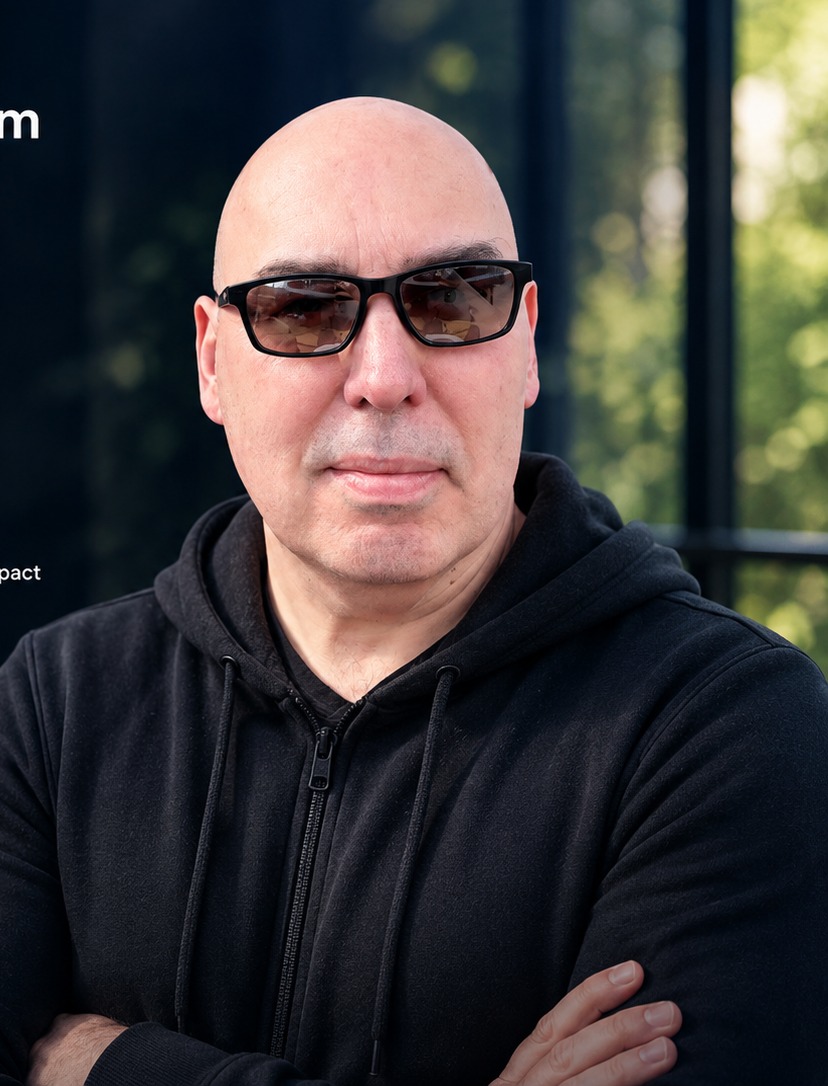
Jon, founder of AI Ninjas and HaloNinjas

We run this ourselves.

AI Ninjas is led by Jon and the team behind HaloNinjas. We run service desks, integrate Halo and put AI into live operations, including our own. The lifecycle exists because we needed it before anyone asked us for it.

  • HaloITSM certified partner in Edinburgh
  • Lifecycle artefacts used on our own service desk first
  • Senior-led delivery from briefing through execution
Visit HaloNinjas

Questions we get asked.

What is the AI Service Lifecycle?

A way of running AI agents as managed services rather than a collection of projects. Six stages are built as working artefacts inside Halo.

Do we need to be on Halo?

The lifecycle is built on Halo. Our wider engineering work, including agents, MCP tooling, retrieval, integration and bespoke applications, is not tied to one platform.

What does the assessment cost and how long does it take?

£4,950 + VAT, fixed before we start. Two weeks from kickoff to readout, with four to six hours of your team's time.

What is the scorecard?

Eighteen questions in about five minutes. You get your maturity level and priority gaps on screen. No sign-up is required.

Who actually does the work?

The team behind HaloNinjas, who run service desks and Halo estates day to day. The people in the briefing are the people on the engagement.

Start with where you actually are.

Five minutes on the scorecard gives you your maturity level and your three biggest gaps.

Next step

Book a 30-minute briefing.

A briefing, not a pitch, with the people who do the work.

Book a briefing